
Speaker Information
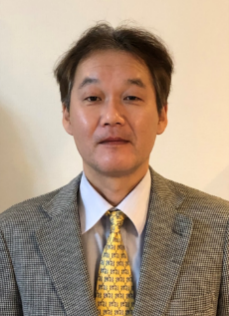
Hiroyuki Nakamura
Maxscend Microelectronics Co Ltd.
Abstract
In recent years, due to high performance and multi-band applications of mobile communication devices, there is an increasing need for high performance and miniaturization of filters that are used. Acoustic filters using surface acoustic wave (SAW) and bulk acoustic wave (BAW) are widely used for smartphones. Especially, in the field of SAW filters, there has been rapid progress in temperature compensation technology using dielectric thin films and high Q technology using bonded substrates. However, to realize a SAW filter with high Q and excellent characteristics using these substrate technologies, it is essential to suppress spurious responses. Piston-mode operation is widely known as a technique for high Q and spurious suppression in the SAW filter application. Also, the applicability of double raised borders is proposed in the BAW resonator design. This presentation gives an overview of the design and characteristics of SAW resonators, and investigates the resonator design that achieves both spurious suppression and high Q performance.
Speaker Biography
Hiroyuki Nakamura received Bachelor and Master degrees from Tohoku University, Japan, in 1993 and 1995, respectively, and his Doctorate degree from Chiba University in 2009. He is currently working in Maxscend Microelectronics Co Ltd. He has been involved in research and development on microwave circuitry and components, especially on SAW filters for mobile communication applications. He has published over 50 papers on SAW filter, filter design and circuit. He is a member of the Technical Program Committee for The IEEE International Ultrasonics Symposium and is an IEEE Senior member.
Key Achievements:
- 50+ publications on SAW filter design and applications
- Expert in temperature compensation technology for SAW filters
- Specialist in high Q bonded substrate technologies
- Active contributor to IEEE International Ultrasonics Symposium
- IEEE Senior Member with expertise in microwave circuits